Foldable iPhone: The Camera Conundrum – Balancing Image Quality with Form Factor
The Foldable iPhone: A Balancing Act for Camera Technology
The long-rumored foldable iPhone presents a unique set of engineering challenges, particularly when it comes to the camera system. While advancements in display and hinge technology are crucial, delivering a flagship-level camera experience within the constraints of a foldable form factor is paramount for Apple's success. Unlike traditional smartphones, the foldable design impacts component placement, sensor size, and lens design, forcing Apple to innovate or make strategic compromises.
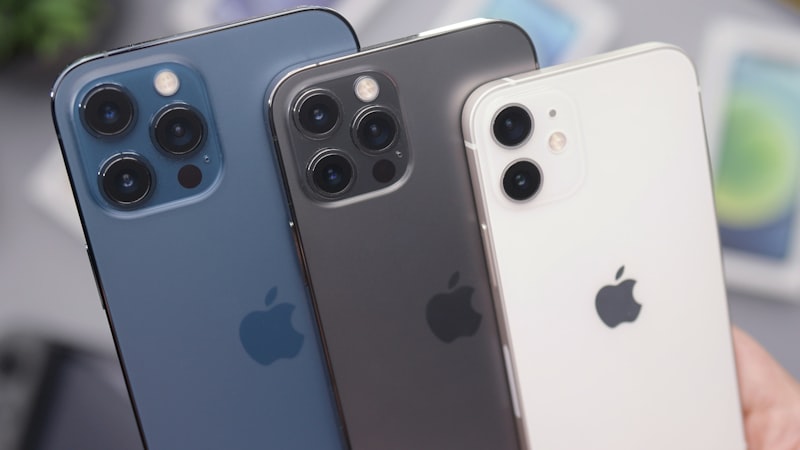
One of the primary challenges lies in accommodating a multi-lens camera system within the limited internal space. Current iPhone Pro models boast sophisticated camera arrays, including wide, ultrawide, and telephoto lenses, along with LiDAR scanners. Replicating this functionality in a foldable device, which inherently has less internal volume due to the folding mechanism, requires rethinking the camera module's design and placement.
Potential Solutions and Compromises
Several potential solutions are being explored, each with its own set of advantages and disadvantages:
- Periscope Telephoto Lens Integration: Periscope lenses, which use prisms to fold the light path, allow for greater optical zoom capabilities without increasing the camera module's thickness. While currently used in some high-end smartphones, integrating a periscope lens into a foldable iPhone would require further miniaturization and optimization. This technology is crucial to maintaining optical zoom capabilities without significantly impacting the phone's folded thickness.
- Sensor Size Optimization: While larger sensors generally capture more light and produce better image quality, they also require larger lenses and more space. Apple might need to optimize sensor size to balance image quality with form factor. This could involve using advanced computational photography techniques to compensate for the reduced sensor size, leveraging the power of the A-series chip.
- External Camera Module: A more radical approach would involve incorporating a prominent external camera module, similar to some Android foldables. While this would provide more space for larger sensors and lenses, it could compromise the device's aesthetics and increase its fragility. Given Apple's design sensibilities, this seems like a less likely option.
- Software-Driven Image Enhancement: Apple's expertise in computational photography, as we explored in our analysis of display technology at iPhone View, could play a crucial role in mitigating the limitations of a smaller camera module. Features like Deep Fusion, Smart HDR, and Night mode could be further enhanced to compensate for reduced sensor size or lens performance.
The Supply Chain Perspective
Recent supply chain reports suggest that Apple is actively working with component suppliers to develop miniaturized camera modules and advanced lens technologies specifically for foldable devices. These reports indicate a focus on high-refractive-index lenses and advanced image stabilization systems to improve image quality in a compact form factor. The success of the foldable iPhone's camera will heavily rely on these supply chain innovations.
The User Experience Impact
Ultimately, the camera solution Apple chooses for the foldable iPhone will have a significant impact on the user experience. Will it deliver the same image quality and versatility as the current iPhone Pro models? Or will users have to accept some compromises in exchange for the unique form factor? The answer to this question will be a key factor in determining the foldable iPhone's success in the market. The industrial design implications for the camera array are also significant, and as we discuss at iPhone Arc, Apple's design team will have to strike a balance between form and function.
The camera conundrum is just one piece of the puzzle. How Apple balances the trade-offs between form factor, image quality, and user experience will define the future of the foldable iPhone.
Questions readers ask
What's the biggest tradeoff Apple has to swallow for foldable camera challenges?
Every Apple decision is a tradeoff, and the obvious one here is internal volume. Adding foldable camera challenges costs millimetres somewhere — usually battery capacity or camera module depth — and Apple has to decide which line item to trim.
What does foldable camera challenges actually cost — in price, weight, or battery?
Expect a premium of roughly $200–300 over the standard model, plus a small weight penalty. Battery life is the bigger variable — early prototypes typically trade an hour or two of screen-on time for the new capability, then claw it back over a generation.
How does foldable camera challenges change the upgrade calculus for existing owners?
Existing owners weigh foldable camera challenges against the upgrade they were already planning. If the feature is meaningful for daily use, it pulls forward upgrades by about a year; if it is novelty, it shifts nothing.
Does foldable camera challenges require new developer APIs, or can existing apps adapt?
Apple historically ships a quiet developer API the year before the hardware lands, so existing apps that follow human-interface guidelines should adapt with modest work. Apps that hard-code layouts will need updates.
In short — what's the takeaway on more from iphone open?
It comes back to whether Apple can ship foldable camera challenges without compromising the parts of the iPhone people already pay for. The detail in this section is where that case is made or broken.