Foldable iPhone: The Quest for Seamless Content Consumption Across Form Factors
Foldable iPhone: The Quest for Seamless Content Consumption Across Form Factors
The advent of the foldable iPhone promises a revolution in how we interact with content. Unlike traditional smartphones with fixed displays, the foldable iPhone presents a unique challenge: ensuring a seamless and intuitive user experience across its various form factors – closed, partially open, and fully open. This isn't simply about scaling existing interfaces; it necessitates a fundamental rethinking of content adaptation and presentation.
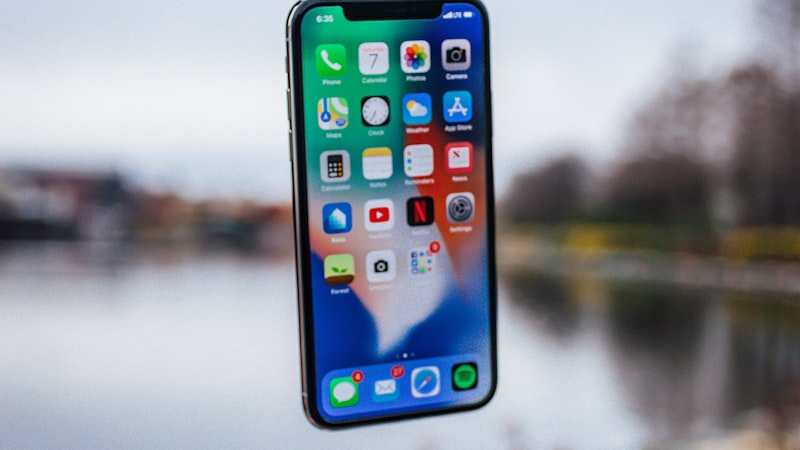
One of the primary concerns revolves around video consumption. While traditional 16:9 video content remains prevalent, the foldable iPhone's expanded display opens the door to different aspect ratios and viewing experiences. Consider the potential for immersive cinematic experiences when the device is fully unfolded, leveraging the entire screen real estate. However, this raises questions about how content will be adapted to fit the larger display without distortion or cropping. Apple will likely employ intelligent scaling algorithms and potentially partner with content providers to offer optimized viewing modes tailored specifically for the foldable form factor.
The partially open form factor introduces further complexity. Imagine holding the device like a book, with content displayed across both halves of the screen. This could be ideal for reading ebooks, browsing magazines, or even composing emails with a keyboard on one half and the text editor on the other. However, content must be intelligently divided and presented in a way that feels natural and intuitive. This requires careful consideration of typography, layout, and interactive elements.
Beyond video, the foldable iPhone will demand a new approach to web browsing. Many websites are designed with responsive layouts that adapt to different screen sizes. However, the foldable iPhone's unique dimensions and aspect ratios will push the limits of current responsive design principles. Websites may need to implement adaptive layouts that specifically cater to the foldable form factor, ensuring that content is displayed optimally regardless of how the device is held or oriented.
Apple has a history of prioritizing accessibility, and the foldable iPhone will likely be no exception. Features like Dynamic Type, which allows users to adjust the size of text across the system, will be crucial for ensuring readability on the expanded display. Furthermore, Apple may introduce new accessibility features specifically designed for the foldable form factor, such as voice control enhancements for navigating content or alternative input methods for users with motor impairments.
The challenge of adapting content for the foldable iPhone extends beyond simply scaling and resizing. It requires a deep understanding of user behavior and a commitment to creating a truly seamless and intuitive experience. As we explored in our analysis of display technology at iPhone View, the quality of the display itself plays a crucial role in content consumption. A high-resolution, vibrant display will enhance the viewing experience and make it easier to read text and view images, especially on the larger unfolded screen. Apple's ProMotion technology, with its variable refresh rate, will also be essential for ensuring smooth and fluid scrolling and animations, further contributing to a seamless user experience.
Furthermore, the ecosystem of apps needs to evolve. While some apps might seamlessly adapt, others will need significant updates to truly take advantage of the foldable form factor. Apple's continued support and evolution of SwiftUI will play a crucial role in enabling developers to create adaptive and dynamic user interfaces that work well on both traditional iPhones and the foldable model.
The success of the foldable iPhone hinges on its ability to deliver a compelling content consumption experience across its various form factors. By carefully considering the challenges and opportunities presented by the foldable design, Apple can create a device that is not only innovative but also truly useful and enjoyable to use. The seamless integration of hardware and software will be paramount in achieving this goal, ensuring that users can effortlessly switch between different form factors without sacrificing functionality or usability. This holistic approach to design and engineering will be the key to unlocking the full potential of the foldable iPhone.
Questions readers ask
Does foldable seamless content consumption require new developer APIs, or can existing apps adapt?
Apple historically ships a quiet developer API the year before the hardware lands, so existing apps that follow human-interface guidelines should adapt with modest work. Apps that hard-code layouts will need updates.
What would convince a sceptical reviewer that foldable seamless content consumption is worth it?
Hands-on time is the only honest test. A reviewer's first hour with the device tells them whether foldable seamless content consumption is solving a real problem they had, or a feature looking for a use case. The reviews following launch will be the verdict.
Will foldable seamless content consumption replace the current model or sit alongside it?
The likeliest path is co-existence — a new variant alongside the existing lineup, not a replacement. Apple's segmentation playbook keeps the older model around at a lower price for at least one cycle to absorb the gap.
How does foldable seamless content consumption stack up against what Samsung or Google already ship?
Android OEMs reached this corner of the market first, but they did so with looser tolerances on durability and software polish. Apple's bet is that arriving second with a tighter integration story wins more buyers than arriving first.
In short — what's the takeaway on more from iphone open?
It comes back to whether Apple can ship foldable seamless content consumption without compromising the parts of the iPhone people already pay for. The detail in this section is where that case is made or broken.